How to Create All-in-One VPN Server | HTTP Custom with UDP, SlowDNS & SSL Setup

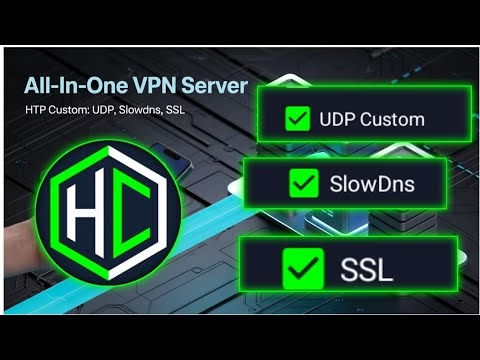
Deploying multiple VPN clients for different connection protocols can be tedious. A more efficient solution is configuring an **All-in-One VPN Server** that supports UDP Custom, SlowDNS (DNS Tunnel), and SSL protocols—all managed within the versatile **HTTP Custom** client. This setup provides maximum flexibility, allowing you to switch connection methods depending on your network environment.
This guide explains how to install the client, generate an all-in-one server configuration, and configure UDP, SlowDNS, and SSL connection protocols.
Table of Contents
- Video Tutorial
- Step 1: Installing HTTP Custom
- Step 2: Generating an All-in-One Server Account
- Step 3: Configuring UDP, SlowDNS & SSL Protocols
- FAQ & Troubleshooting
Video Tutorial
Step 1: Installing HTTP Custom
Obtain the latest version of the client from the app repository:
- Open the Google Play Store on your Android device.
- Search for
HTTP Customand install the client. - Launch the application to access the home screen.
Step 2: Generating an All-in-One Server Account
To support multiple protocols, generate an account on a high-speed hosting site:
- Open your browser and navigate to a trusted SSH/VPN hosting site.
- Locate the **All-in-One Server** or **UDP + DNS + SSL** generation page.
- Choose a low-latency server location close to your region, input your username and password, and create the account.
- Copy the server parameters to your clipboard. You will need the Server Host, port configurations for SSH/SSL, and the Name Server (NS) details for SlowDNS.
Step 3: Configuring UDP, SlowDNS & SSL Protocols
Configure HTTP Custom based on your preferred protocol:
A. UDP Custom Mode
Check **UDP Custom** on the home screen. Input the server details in the format: Host:Port@username:password and tap connect.
B. SlowDNS Mode
Check **SlowDNS** on the home screen. In the SlowDNS settings, input your generated Name Server (NS) host and Public Key. Tap connect to tunnel traffic via DNS queries.
C. SSL Mode
Check **SSL (SNI)** on the home screen. In the SNI field, input your zero-rated host address, enter the server details, and tap connect.
FAQ & Troubleshooting
1. What is the benefit of SlowDNS over SSL mode?
SSL mode offers significantly faster speeds but requires an open SSL port and a working SNI host. SlowDNS operates by wrapping traffic in DNS queries. While much slower, SlowDNS is highly effective on networks where all standard internet ports are blocked.
2. Why does the connection fail in all modes?
Verify that your generated account has not expired, as free accounts typically last 3 to 7 days. If the account is active, ensure you have checked the correct protocol boxes on the main page corresponding to your setup.
3. Can I use custom payloads in this setup?
Yes. If your mobile carrier inspects and blocks connection requests, you can use the built-in payload generator in HTTP Custom to write custom HTTP request headers to bypass blocks.