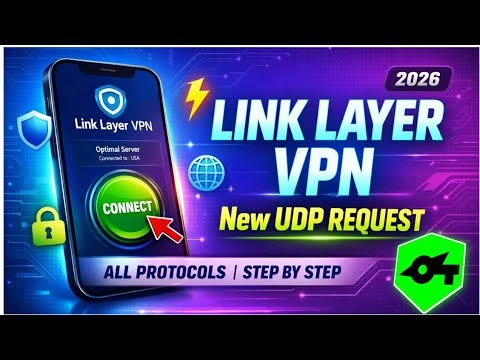
New UDP Request VPN | Link Layer VPN all Settings

Deploying a secure network encapsulation tool is a key element of mobile network optimization. Link Layer VPN is an advanced client that supports a wide array of transport protocols, including UDP Request, Secure Shell (SSH), Secure Socket Layer (SSL/TLS), and custom HTTP payload setups. This versatility allows network administrators and advanced users to establish reliable connections over restricted carrier networks.
This technical guide provides a walkthrough of installing, configuring, and starting Link Layer VPN, including configuring UDP requests and custom header parameters.
Table of Contents
- Video Tutorial
- Step 1: Downloading & Installing Link Layer VPN
- Step 2: Interface & Server Updates
- Step 3: Setting Up UDP Request & Custom Settings
- Step 4: Establishing the Tunnel Connection
- FAQ & Troubleshooting
Video Tutorial
Step 1: Downloading & Installing Link Layer VPN
The Link Layer VPN client is available through standard mobile application repositories. To install:
- Open the Google Play Store on your Android device.
- Input
Link Layer VPNin the search bar. - Select the official app developed by the authorized team and tap Install.
- Once installed, open the application to proceed with the configuration phase.
Step 2: Interface & Server Updates
Upon initial launch, ensure your device has a working network connection (Wi-Fi or cellular). This is required because the client must contact its backend API to fetch the latest server nodes and network configuration files.
- Server Node Update: The app will automatically check for configuration updates on boot. If updates are found, it will perform a quick restart.
- Selecting Server Location: Tap on the “Server” dropdown segment on the main dashboard. Select a server closest to your location to ensure optimal latency.
Step 3: Setting Up UDP Request & Custom Settings
Link Layer VPN’s core feature is its support for custom connection protocols. You can choose from the following configurations:
A. UDP Request Configuration
- Under “Connection Mode”, select UDP Request.
- This mode forces the client to wrap transport layer traffic in UDP packets, which is highly effective for reducing latency in gaming and streaming applications.
B. Custom SSL/TLS & HTTP Settings
- If utilizing SSL/TLS encapsulation, select the SSL/TLS (SNI) mode.
- Input the zero-rated SNI hostname corresponding to your carrier bypass rules.
- For custom payload headers, toggle the **Payload Generator**, configure your custom HTTP headers (Host, User-Agent, etc.), and save.
Step 4: Establishing the Tunnel Connection
With configurations saved, navigate back to the home screen and tap the large **Start** button. Android will ask for a VPN permission popup on the first run; accept it. Monitor the connection logs on the dashboard. When the status changes to “Connected”, your device’s traffic is secured through the active Link Layer VPN tunnel.
FAQ & Troubleshooting
1. Why is the UDP Request mode failing to connect?
UDP Request requires support on both the client and the remote server node. If the connection fails, verify that your selected server node supports UDP. Additionally, ensure that your mobile carrier is not blocking UDP traffic on the target port.
2. How do I clear the local configuration in Link Layer VPN?
If you need to restore the application to its default settings, open the side menu, tap on Reset settings, and confirm. This will clear all custom profiles and force the app to pull the latest official carrier profiles.
3. Can I use custom DNS servers with this VPN?
Yes. In the application settings, toggle the Custom DNS option and input your preferred DNS addresses (e.g. 8.8.8.8 or 1.1.1.1) to prevent DNS leaks and optimize query speeds.