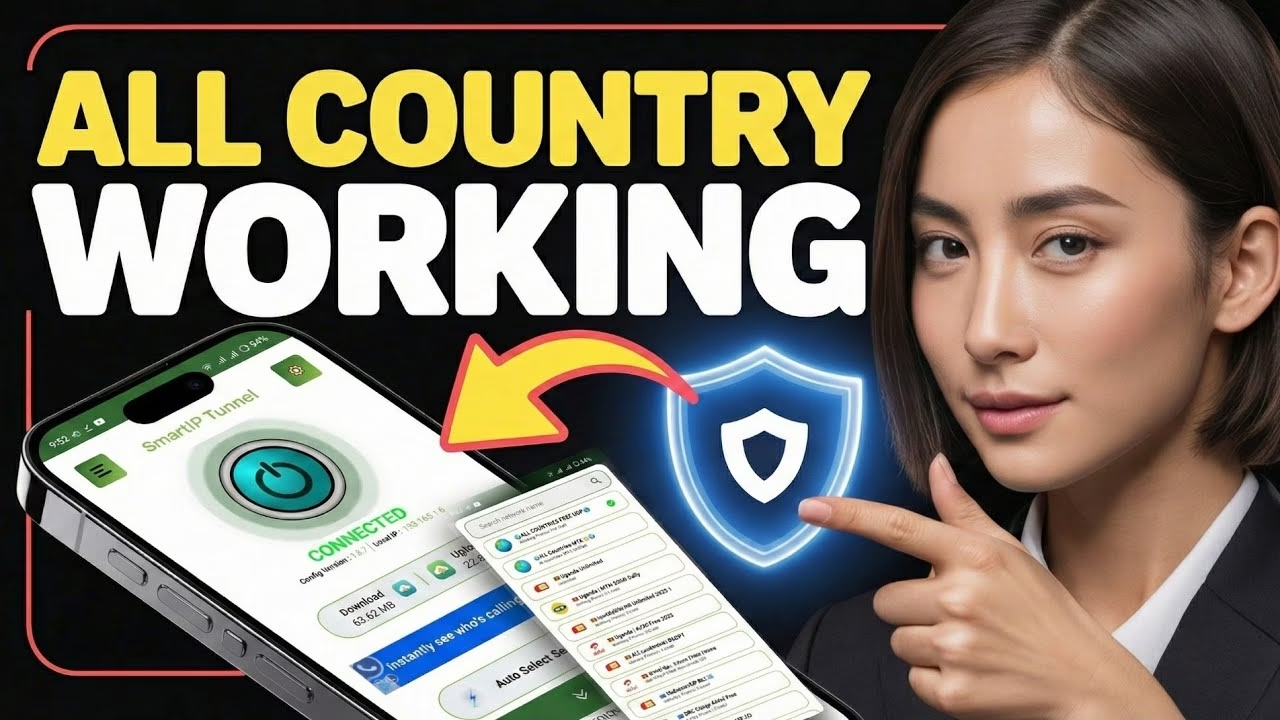
New All Country WORKING VPN | Fast VPN

In modern network administration and digital connectivity, configuring secure transmission lines is key to maintaining privacy and optimal data performance. This comprehensive guide focuses on New All Country WORKING VPN | Fast VPN, outlining the exact configuration parameters, setup workflows, and troubleshooting methods required to deploy this solution successfully.
Table of Contents
- Video Tutorial Walkthrough
- Step 1: System Requirements & Prerequisites
- Step 2: Configuration & Implementation Steps
- Step 3: Verification & Latency Testing
- Frequently Asked Questions & Troubleshooting
Video Tutorial Walkthrough
Step 1: System Requirements & Prerequisites
To configure and run the setup described in the tutorial, ensure you have the following prerequisites prepared in your work environment:
- An Android or iOS mobile device with stable internet access.
- The latest client application package installed from the official repository (Google Play Store).
- Access to custom configuration files or server account details (Host, Port, Username, Password).
Step 2: Configuration & Implementation Steps
. , I’m going to introduce you to a powerful new VPN that comes with its own fast servers and supports multiple protocols for secure and unlimited browsing. This guide will take you step by step from installing the VPN to configuring protocols and even sharing the connection with other devices.
So stay with me till the end and don’t forget to like, share, and subscribe. First of all, open any browser such as Chrome or any other. Once your browser is open, go to the search bar and type UDP custom website.
Then press enter. This will bring up a list of search results related to the VPN service we’ll be using today. From the search results page, tap on the official UDP custom website.
Once selected, you’ll be taken directly to the homepage where you’ll find various tools and features offered by the platform. After landing on the homepage, locate the menu icon, usually found at the top of the screen. Tap on it and a list of menu options will appear.
From this list, select freeVPN to move forward to the VPN download section. Once you’re on the VPN page, you’ll see multiple VPN options. Look for the one named Simple UDPVPN as this is the tool we will be working with.
Tap on it to start the download process. Next, tap the install button. Your device will now begin downloading and installing the app.
This may take a few minutes, so be patient and allow the installation to complete without interruption. After installation, you will see the open button. Tap on this button to launch Simple UDPVPN for the first time.
Depending on your device, it may also ask for notification permission. You can allow or decline based on your preference. Once the app is open, you’ll be redirected to the Simple UDPVPN home screen.
At this point, make sure you have mobile data or Wi-Fi enabled so that the app can load the available servers. The server list will update and the VPN may briefly restart to refresh its configuration. So, don’t worry if that happens.
Now, let’s explore the main parts of the VPN. The interface is divided into two sections. One for selecting servers and the other for choosing protocols.
To select a server, tap on the server section and you will see a list of available locations. Choose any server you prefer. These can be changed anytime depending on your needs.
After selecting a server, move on to choosing a protocol. Tap on the tweaks button and you’ll see a list of built-in protocol tweaks. Scroll through and select any option that works best for your network and usage.
If you want more advanced control, you can use custom settings. To do this, tap on the radio button next to custom settings located in the top right corner. A new window will open allowing you to select from protocols such as slow DNS, V2, Ray, SSL settings, and others.
Some protocols require custom servers, while others allow built-in options. Choose whichever method, built-in or custom, suits your needs. Once everything is configured, return to the home screen.
You will see a large start button. Tap on it to connect the VPN. The connection should establish within a few seconds.
If you want to share your VPN connection with other devices or your computer, simply tap the side menu and select tethering. From there, turn on the toggle switch to activate connection sharing. This feature is extremely useful when you want secure browsing across multiple devices.
. If you found this tutorial helpful, make sure to like the video, subscribe to the channel, and share it with friends who might benefit from this VPN guide. Your support means a lot and helps me bring more useful content to you.
Step 3: Verification & Latency Testing
Once the initial setup and configuration steps are completed, verify the connection status:
- Toggle the master connection switch in the client app dashboard.
- Monitor the live connection log. It should show a successful handshake and display a ‘Connected’ status.
- Navigate to a public IP verification tool (e.g. whoer.net) to verify that your original IP address is masked.
Frequently Asked Questions & Troubleshooting
1. Why is the connection failing with an SSH/UDP timeout?
This is usually due to a blocked port or expired server account credentials. Double-check that your server credentials are active. If they are, try changing the connection port or switching server nodes within the app settings.
2. How do I update the built-in carrier tweak configurations?
To load the latest tweak profiles, connect to a stable network, open the side menu inside the application, and select Update Config. The client will query the remote server and fetch the latest configs.
3. How can I resolve background connection drops?
Ensure that the application is excluded from Android battery optimizations. In your device’s settings, locate the app, navigate to battery usage parameters, and toggle the setting to Unrestricted to allow background processes.