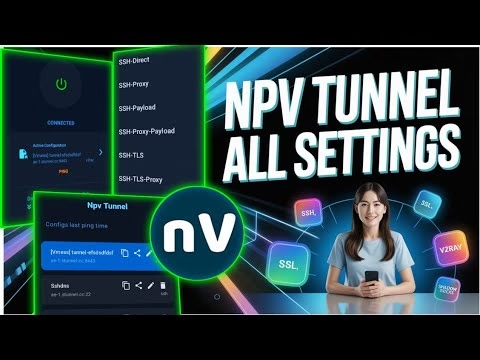
How to create NPV tunnel Unlimited Configs | NPV tunnel All Settings

In modern network administration and digital connectivity, configuring secure transmission lines is key to maintaining privacy and optimal data performance. This comprehensive guide focuses on How to create NPV tunnel Unlimited Configs | NPV tunnel All Settings, outlining the exact configuration parameters, setup workflows, and troubleshooting methods required to deploy this solution successfully.
Table of Contents
- Video Tutorial Walkthrough
- Step 1: System Requirements & Prerequisites
- Step 2: Configuration & Implementation Steps
- Step 3: Verification & Latency Testing
- Frequently Asked Questions & Troubleshooting
Video Tutorial Walkthrough
Step 1: System Requirements & Prerequisites
To configure and run the setup described in the tutorial, ensure you have the following prerequisites prepared in your work environment:
- An Android or iOS mobile device with stable internet access.
- The latest client application package installed from the official repository (Google Play Store).
- Access to custom configuration files or server account details (Host, Port, Username, Password).
Step 2: Configuration & Implementation Steps
In this video, I’ll guide you step by step on how to set up NPV Tunnel for fast, stable, and secure browsing. If you’ve been searching for a powerful VPN solution that gives you control over SSH, SSL, slow DNS, V2 Ray, and Shadow Socks all in one place, then you’ve come to the right tutorial. Throughout this guide, I’ll walk you through downloading the app, creating a single all-in-one server, and configuring every major protocol.
Whether you’re a beginner or already familiar with VPNs, this video will help you set up everything perfectly to enjoy a smooth and secure internet experience. So, make sure to watch till the end and follow every step carefully. Let’s begin by downloading NPV Tunnel on your Android device.
Open the Play Store and type NPV Tunnel in the search bar. Once it appears in the search results, tap on it and then press the install button. The download will take a few minutes depending on your internet speed.
After installation is complete, tap open. You’ll now see the NPV Tunnel home screen where you’ll later add and manage all your VPN configurations. Keep the app open as we’ll come back to it after creating the server.
Before setting up any configuration inside NPV Tunnel, we need a single server that supports all major VPN protocols. To create one, open any browser on your device, such as Chrome or Firefox, and type SSH Tunnel in the search bar. From the search results, open the official SSH Tunnel website.
This platform provides free and premium servers that support SSH, Slow DNS, V2 Ray, and Shadow Socks. On the homepage, log in using your Google account. After signing in, you’ll reach your personal dashboard where you can create your all-in-one server.
Now, select a region such as Asia, Europe, America, or Africa. For example, choose Asia for better latency if you’re located nearby and then select a country like the UAE for faster speeds. Next, fill out the account form with your username, password, and complete the capture verification.
Tap create server or submit. Within a few seconds, your server will be generated successfully. You’ll now see all configurations displayed.
SSH, slow DNS, V2 Ray, and Shadow Socks with details like IP address, host name, ports, and credentials. Copy and save these details safely in your notes app because we’ll use them in the upcoming steps when setting up each protocol. Now, let’s configure the SSH section inside NPV tunnel.
Go back to the NPV Tunnel app. At the bottom of the screen, tap on the globe icon labeled servers. Then on the top right corner, tap the plus icon to add a new configuration.
Choose add config manually and select SSH config. First, we’ll start with SSH direct. Under the protocol field, select SSH direct.
Enter the host name, port, username, and password from the server details you copied earlier. Give your configuration a name and tap save. Next, for SSH proxy, follow the same process, but this time add a proxy address and port.
If the proxy requires authentication, enter the proxy username and password as well. Save this configuration. For SSH payload, select SSH payload as the protocol.
Enter your SSH server details again and add your payload string which helps with tunneling through restricted networks. Save when done. Finally, for SSH proxy payload, combine both proxy and payload options with your SSH credentials.
Once all SSH configurations are added, you’ll be ready to connect using any of these profiles depending on your network preference. Next, we’ll configure SSH, SSL, and TLS settings to make your connection even more secure. From the NPV Tunnel home screen, tap the servers icon again, and then tap the plus icon.
Choose add config manually and select SSH config. Under the protocol section, choose SSL/TLS. Now, enter your SSH servers IP or host name, port, username, and password.
In the SNI field, you can enter a valid domain name if required by your provider. This helps in bypassing certain network restrictions. Give the configuration a name and tap save.
If you want to use a proxy with your SSL setup, create another configuration under SSL proxy. Simply add your proxy host and port along with the same SSH credentials. You can also create specialized combinations like SSL payload and SSL proxy payload to enhance your security and speed by combining payloads or proxy tunnels with SSL encryption.
Once all SSL configurations are set up, you can connect through any of them to experience stronger encryption and smoother browsing performance. Now, let’s move to the SSH slow DNS setup. This configuration is perfect for users in regions where traditional VPN connections are blocked or throttled.
On the NPV tunnel home screen, tap on configs, then tap the plus icon at the top right corner. Choose add config manually and then tap SSH config. Under the protocol section, select SSHDNTT.
Now fill in the required details. the DNS tunnel server, SSH server address, port, username, and password. These values should come from your all-in-one server details you saved earlier.
Once filled in, give your configuration a clear name and tap save. After saving, go back to the home screen and press connect. The slow DNS tunnel will start, giving you a stable connection even in low-speed or restricted networks.
Let’s now configure NPV Tunnel for V2. Go back to the app’s home screen and tap on servers. Then tap the plus icon to add a new configuration.
Choose import from clipboard and select v2ray config. Paste your v2ray configuration details from the server page you saved earlier. Once imported, your configuration will appear in the list.
Select it, then return to the home screen. Tap on connect to start your v2 ray tunnel. You should now have a secure and fast connection through the V2 Ray protocol, ideal for bypassing filters and maintaining privacy.
Finally, let’s set up Shadow Socks. From the home screen, tap on servers, then the plus icon again. Choose import from clipboard and select Shadow Socks Config.
Paste your Shadow Socks configuration that you saved earlier. After importing, the Shadow Socks server will appear in your list of profiles. Select it.
Go back to the home screen and tap connect. Your Shadow Socks tunnel is now active. This configuration is excellent for fast and encrypted browsing, especially for streaming and heavy data usage.
Congratulations. You’ve now successfully configured NPV tunnel with multiple protocols SSH, SSL, slow DNS, V2ay, and Shadow Socks. You can switch between them anytime depending on your speed, privacy, or network needs.
Thank you for watching and I’ll see you in the next video with another powerful guide to boost your online privacy and connection performance.
Step 3: Verification & Latency Testing
Once the initial setup and configuration steps are completed, verify the connection status:
- Toggle the master connection switch in the client app dashboard.
- Monitor the live connection log. It should show a successful handshake and display a ‘Connected’ status.
- Navigate to a public IP verification tool (e.g. whoer.net) to verify that your original IP address is masked.
Frequently Asked Questions & Troubleshooting
1. Why is the connection failing with an SSH/UDP timeout?
This is usually due to a blocked port or expired server account credentials. Double-check that your server credentials are active. If they are, try changing the connection port or switching server nodes within the app settings.
2. How do I update the built-in carrier tweak configurations?
To load the latest tweak profiles, connect to a stable network, open the side menu inside the application, and select Update Config. The client will query the remote server and fetch the latest configs.
3. How can I resolve background connection drops?
Ensure that the application is excluded from Android battery optimizations. In your device’s settings, locate the app, navigate to battery usage parameters, and toggle the setting to Unrestricted to allow background processes.