Fast Working UDP Custom and UDP Request Configs

In modern network administration and digital connectivity, configuring secure transmission lines is key to maintaining privacy and optimal data performance. This comprehensive guide focuses on Fast Working UDP Custom and UDP Request Configs, outlining the exact configuration parameters, setup workflows, and troubleshooting methods required to deploy this solution successfully.
Table of Contents
- Video Tutorial Walkthrough
- Step 1: System Requirements & Prerequisites
- Step 2: Configuration & Implementation Steps
- Step 3: Verification & Latency Testing
- Frequently Asked Questions & Troubleshooting
Video Tutorial Walkthrough
Step 1: System Requirements & Prerequisites
To configure and run the setup described in the tutorial, ensure you have the following prerequisites prepared in your work environment:
- An Android or iOS mobile device with stable internet access.
- The latest client application package installed from the official repository (Google Play Store).
- Access to custom configuration files or server account details (Host, Port, Username, Password).
Step 2: Configuration & Implementation Steps
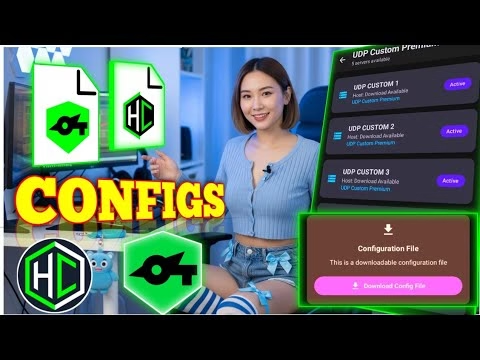
, . , I’ll guide you step by step on how to download and use UDP custom and UDP request conf. By the end of this video, you’ll have everything configured properly for a smoother and safer browsing experience.
Let’s get started. First, we need to create servers using the UDP custom app. Open your Play Store and in the search bar, type custom UDP.
Press enter. Locate the official custom UDP app and tap on it. Once you’re there, tap on the install button and wait a few moments for the installation to complete.
When you open the UDP custom app, the servers will automatically load. If not, tap the update servers button to refresh them. Let’s start with the UDP custom configs first.
Tap on UDP custom configs. Choose any configuration from the list and then tap download config. Now, let’s use this UDP custom config in the HTTP custom app.
Head back to the Play Store and download HTTP custom. Tap the plus icon. Select import config and find the config file in your downloads folder.
After importing it, tap connect to start the VPN. and Next, go to the UDP custom app, tap UDP request configs, and download one. The file will be saved in your downloads folder.
Next, download and open the socket tunnel VPN app. Tap the three dots, select import config, and choose the UDP request file from your downloads. Tap connect to start the VPN.
You’re all set. You’ve now learned how to set up UDP custom and UDP request configs for faster, safer browsing. If this guide helped, please like, share, and subscribe.
.
Step 3: Verification & Latency Testing
Once the initial setup and configuration steps are completed, verify the connection status:
- Toggle the master connection switch in the client app dashboard.
- Monitor the live connection log. It should show a successful handshake and display a ‘Connected’ status.
- Navigate to a public IP verification tool (e.g. whoer.net) to verify that your original IP address is masked.
Frequently Asked Questions & Troubleshooting
1. Why is the connection failing with an SSH/UDP timeout?
This is usually due to a blocked port or expired server account credentials. Double-check that your server credentials are active. If they are, try changing the connection port or switching server nodes within the app settings.
2. How do I update the built-in carrier tweak configurations?
To load the latest tweak profiles, connect to a stable network, open the side menu inside the application, and select Update Config. The client will query the remote server and fetch the latest configs.
3. How can I resolve background connection drops?
Ensure that the application is excluded from Android battery optimizations. In your device’s settings, locate the app, navigate to battery usage parameters, and toggle the setting to Unrestricted to allow background processes.